How Much Can the 2026 Honda Civic Hybrid Cut Your Fuel Bill?
October 30 2026,
Most Quebec commutes are not highway hauls. They are stop-and-go stretches through city intersections, errands strung together on weekends, and the same route driven five days a week. That pattern matters more than any spec sheet when you are deciding between the 2026 Honda Civic Hybrid and its gas-powered sibling.
This article looks at what the Civic Hybrid actually does for a Quebec driver’s fuel bill, where its efficiency advantage is strongest, and who is most likely to feel the difference at the pump.
Why the 2026 Civic Hybrid Deserves a Look

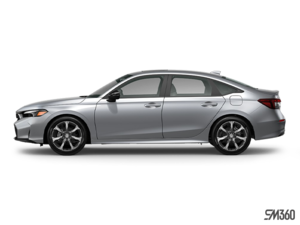
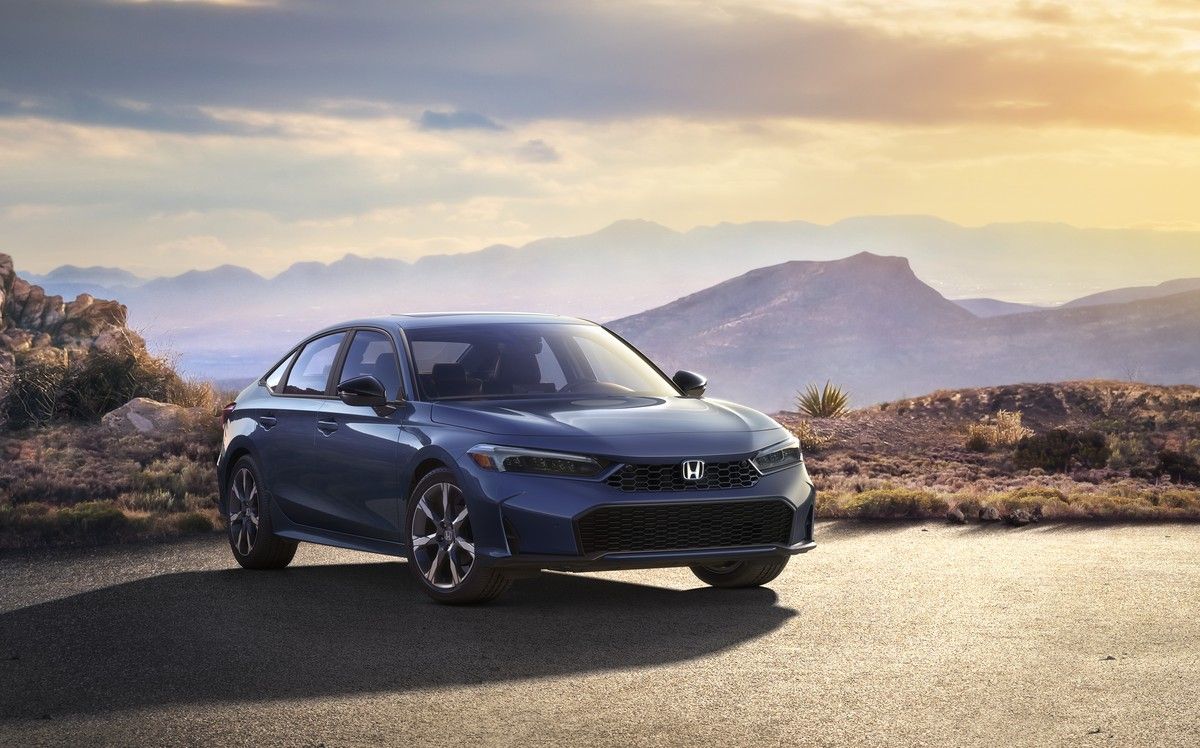
The Civic Hybrid sits at the top of the Civic lineup, offered as a Sport Hybrid or Sport Touring Hybrid sedan, and it pairs Honda’s two-motor hybrid system with a 2.0-litre four-cylinder engine. Combined output is 200 horsepower and 232 lb-ft of torque, making it the most powerful non-Type R Civic ever built.
What sets it apart from the gas Civic is not just the power figure. The hybrid system uses direct drive rather than a traditional transmission or CVT: the two electric motors handle most low-speed propulsion, and the gasoline engine steps in for efficient highway cruising. That layout is exactly why the fuel-consumption story favours city and mixed driving over long highway runs.
The numbers show it clearly. The Sport Hybrid rates 4.7 L/100 km in the city, compared with 7.3 L/100 km for the gas LX and 7.5 L/100 km for the gas Sport. On the highway, the gap narrows: 5.1 L/100 km for the hybrid versus 5.7 to 6.0 L/100 km for the gas trims.
|
Trim |
City (L/100 km) |
Highway (L/100 km) |
Combined (L/100 km) |
|
LX (gas) |
7.3 |
5.7 |
6.6 |
|
Sport (gas) |
7.5 |
6.0 |
6.8 |
|
Sport Hybrid |
4.7 |
5.1 |
4.9 |
That table tells the real story: the hybrid’s biggest fuel-bill savings show up where you brake and accelerate the most, not where you cruise. For a Quebec driver logging city kilometres, that is most weeks.
What Makes the Hybrid System Different
A few grounded details explain why the Civic Hybrid behaves the way it does in daily use:
- Two-motor hybrid system, direct drive. Instead of shifting gears, the motors and engine work together, which is why acceleration feels smooth rather than gear-hunting.
- Four-level regenerative braking, controlled with steering-wheel paddles, that recovers energy every time you slow down in traffic.
- Low-speed electric assistance, which lets the Civic Hybrid run on motor power through stop-and-go conditions, the exact driving pattern where the gas Civic burns the most fuel.
- Regular-fuel requirement. No premium fuel, no special fill-up routine. This is one less thing to think about at the pump.
- Active Noise Control, standard on hybrid trims, for a quieter cabin on longer drives.
None of this requires the driver to change habits. The system does its work in the background, which is the point: savings without a learning curve.
Who the Civic Hybrid Fits Best
The strongest case for the Civic Hybrid belongs to drivers whose weeks are built around short, repeated trips: commuters navigating city traffic, suburban drivers running errands, and anyone racking up steady mileage inside town limits. That is where the 4.7 L/100 km city rating turns into a noticeably lighter fuel bill over a year.
Inside, the Sport Hybrid seats five, with 950 mm of rear legroom and 942 mm of rear headroom, plus a 60/40 split-folding rear seat for longer cargo when needed. Heated front seats and a heated, leather-wrapped steering wheel come standard on the hybrid trims, which matters through a Quebec winter of daily short hops from a cold driveway.
A driver whose routine is mostly highway kilometres, long inter-city drives with fewer stops, will see a smaller gap between hybrid and gas Civic, since the highway numbers sit closer together than the city numbers do.
Hybrid or Gas Civic: Matching the Powertrain to Your Route

This is not a question of which Civic is better outright. It is a question of which powertrain matches your actual driving pattern.
If your week looks like traffic lights, parking lots, and short trips across town, the hybrid’s low-speed electric assistance and regenerative braking are doing constant, cumulative work, and the 4.7 L/100 km city figure reflects that. If your week looks like long, steady highway stretches with few stops, the fuel-economy gap between the hybrid and the gas Sport or LX narrows considerably, and the traditional CVT gas Civic remains a straightforward, capable choice.
Think about your daily route before your headline number. A high-mileage city commuter and a highway-heavy driver will get two very different answers from the same set of specs.
Bringing the Civic Hybrid Home to Montreal
The 2026 Civic Hybrid pairs a two-motor system with regular-fuel simplicity, delivering its strongest fuel savings in city and mixed driving rather than on long highway stretches. For a Quebec commuter logging stop-and-go kilometres, that translates directly into a lighter fuel bill.
Visit Honda Centre-Ville in Montreal to compare the Civic Hybrid against the gas Civic in person, and book a test drive to feel how the two-motor system handles typical Quebec traffic before you decide.